
Billing, Collections and Payments, Customer Experience and Engagement, Healthcare & HIPAA, Healthcare Printing
Printed Patient Statements: Driving Patient Engagement and Faster Collections

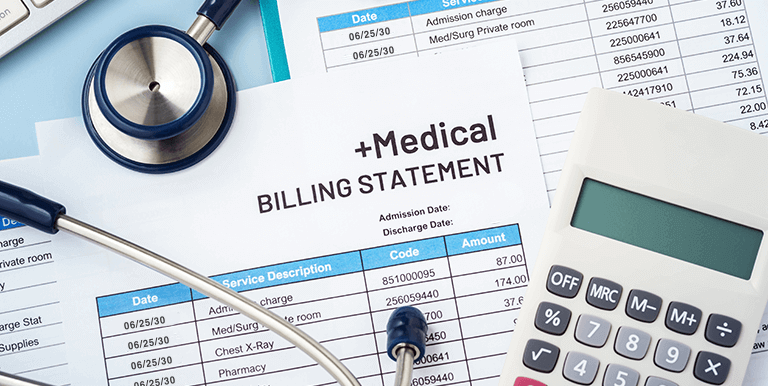
Patient statements do more than communicate a balance due. For healthcare providers, health plans, and billing organizations, a clear, personalized statement can help patients understand what they owe, what action to take next, and where to find support.
When produced through a secure, HIPAA-compliant print-and-mail workflow, printed patient statements can become an important part of a broader patient engagement strategy. They give organizations a reliable physical touchpoint that can direct patients to payment options, patient portals, care resources, appointment scheduling, and preventive-health information.
What Are Patient Statements?
A patient statement is a billing communication that explains a patient’s outstanding balance and provides instructions for resolving it. Depending on the organization and program, it may include payment details, due dates, contact information, insurance-related information, and secure payment methods.
Patient statements are distinct from other healthcare communications, such as explanation of benefits documents, appointment reminders, care plans, and preventive-care outreach. However, these communications can work together in a coordinated print-and-digital engagement program.
An effective patient statement should make three things easy to understand:
- What the patient owes
- Why they owe it
- What they should do next
Why Paper Statements Still Dictate Patient Pay Velocity
Digital channels are important, but they do not reach every patient in the same way. A printed statement provides a tangible, accessible communication that patients can review at their own pace, share with a caregiver or family member when appropriate, and use as a reference when they are ready to take action.
For many patients, a well-designed printed document can make complex billing information feel more manageable. It can also reinforce trust when the communication is accurate, professionally produced, easy to read, and delivered on time.
Printed statements work especially well when they support a specific next step, such as making a payment, visiting a patient portal, calling a billing representative, scheduling an appointment, or learning about a relevant care program.
Designing Statements That Cut Inbound Billing Disputes
Clear Itemization and Plain-Language Balance Summaries
Healthcare bills can be difficult to interpret. Patients may see charges, insurance adjustments, prior payments, and balances without immediately understanding what they need to do.
A patient-friendly statement uses clear labels, logical hierarchy, plain language, and prominent action instructions. Rather than forcing patients to search through dense text, the design should guide them toward the most important information first.
Helpful design elements include:
- A clearly displayed amount due
- A visible payment due date
- A concise explanation of the balance
- Simple payment instructions
- A phone number or support channel for questions
- Plain-language headings and calls to action
Prominent Payment Options and Quick-Pay QR Codes
Statements can direct patients to convenient payment channels without overwhelming them. A secure payment URL, QR code, return envelope, phone-payment option, or patient portal prompt can reduce friction and give patients a choice in how they respond.
For example, a statement may place a QR code next to a clear call to action: “Scan to view your balance and pay securely online.” The printed statement remains useful for patients who prefer mail or phone payments, while the QR code provides a quick path to a digital experience.
Deliver Relevant Messages at the Right Time
Variable data printing allows healthcare organizations to tailor printed communications using approved data fields and business rules. In addition to balance information, organizations may include carefully selected messages related to available payment assistance, portal enrollment, care resources, preventive services, or appointment scheduling.
The message should remain relevant to the recipient and support a clear action. Overloading a statement with unrelated promotions can reduce clarity, so content selection should be guided by patient needs, program goals, and compliance requirements.
Build Trust Through Consistent Communication
Patients are more likely to engage when communications are consistent across channels. Statement language, branding, payment instructions, and contact information should align with the experience a patient finds in the portal, on the phone, and through email or text reminders.
A consistent approach helps patients recognize legitimate communications and understand how to respond. It also gives healthcare organizations a more reliable way to manage messages across the patient journey.
Turning White Space into Transpromotional Health Messaging
A patient statement should be easy to scan, accurate, and designed around the patient’s next action. Consider including:
- Patient name and account details, presented securely
- Current amount due and due date
- A plain-language summary of charges and payments
- Clear payment methods and instructions
- A secure online-payment URL or QR code
- Customer-service contact information
- Information about payment plans or financial assistance, when applicable
- Relevant patient portal, scheduling, or care-resource prompts
- Accessibility-conscious typography, contrast, and layout
- Required privacy, regulatory, and organizational disclosures
Before adding any message, verify that it is appropriate for the patient population, supported by approved data, and consistent with privacy and compliance policies.
Personalization With Variable Data Printing
Personalization should improve relevance, not simply add a patient’s name. With the right data governance and production controls, variable data printing can help organizations present content that reflects a patient’s billing or communication status.
For example, an organization might use different approved statement versions for patients who:
- Have an unpaid balance and need a payment reminder
- May qualify for financial assistance or a payment plan
- Have not enrolled in the patient portal
- Need an appointment-scheduling reminder
- Prefer a particular language or communication format
Every personalization rule should be reviewed for accuracy, privacy, inclusivity, and operational feasibility. Healthcare organizations should also ensure that data files, production workflows, mail handling, and quality-control processes meet their HIPAA and internal security requirements.
Integrate Print With Digital Patient Communications
Print is most effective when it complements digital engagement rather than competing with it. A coordinated strategy can use statements, email, text messaging, patient portals, IVR, and call-center support to make each step easier for patients.
A typical workflow might look like this:
- Send a clear printed patient statement with an amount due and next-step instructions.
- Include a secure digital payment or portal pathway, such as a QR code or easy-to-type URL.
- Use approved digital reminders to reinforce the same next action.
- Provide consistent support through phone, portal, and customer-service channels.
- Measure response and refine the message, timing, and format.
The goal is not to push every patient into one channel. It is to provide clear, consistent options so patients can choose the method that works best for them.
Measure Statement Performance
Healthcare organizations should treat statements as measurable communications, not just transactional documents. Establish a baseline, define the action you want patients to take, and evaluate performance over time.
Useful metrics may include:
- Payment conversion rate
- Time to payment
- Online-payment or QR-code scan activity
- Patient portal logins or enrollments
- Call-center volume and common billing questions
- Appointment completion or scheduling response, when included in the program
- Returned-mail rate and address-quality trends
- Cost per completed action
Testing can reveal which combinations of design, messaging, payment options, timing, and follow-up channels best support patient response. Test one meaningful variable at a time when possible so results are easier to interpret.
Compliance Mandates: Protecting PHI from Production to Mailbox
Healthcare statements contain protected health information and require secure handling throughout the production and delivery process. Organizations should evaluate a print-and-mail partner’s ability to support documented privacy, security, quality-control, and operational requirements.
Key considerations include:
- Secure file intake and data transfer
- Controlled production environments
- Data-access controls and employee training
- Document matching and integrity controls
- Quality assurance during printing and inserting
- Accurate addressing and postal processing
- Mail tracking and reporting capabilities
- Business continuity and service-level expectations
A well-managed workflow helps reduce operational complexity while protecting the integrity of patient communications.
Case Study: HIPAA-Compliant Production of Time-Sensitive Patient Billing Statements
With rising costs and operational challenges to meet deadlines, United WestLabs wanted to focus on their area of expertise – healthcare services – and partner with an expert to outsource print and mail production.
Before engaging FSSI, UWL took on all aspects of production, operating outside of its area of expertise as a healthcare services company. In addition, to facing challenges with late, non-compliant mailings due to aging and unreliable equipment. UWL also experienced high costs to lease, maintain, and operate equipment. FSSI recommended outsourcing most of the statement print and mail operations to optimize the benefits of an experienced print and mail outsourcer, including the latest in statement design services, full workflow reporting and substrate expertise.
The result was 100% on-time, HIPAA-compliant mailings, with the time and resources to focus on their core strengths.
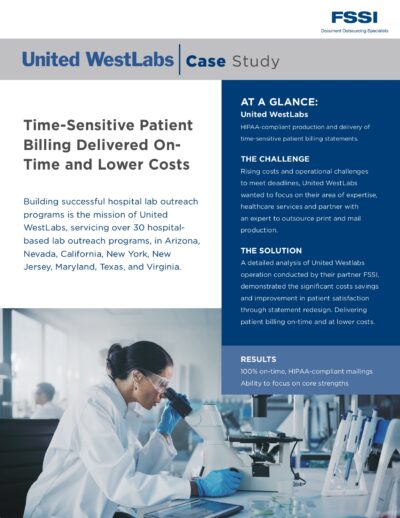
Read the United WestLabs healthcare statement outsourcing case study.
Frequently Asked Questions
What information should a patient billing statement include?
A patient billing statement should clearly show the amount due, due date, account information, a plain-language summary of the balance, payment options, and contact information for questions. It may also include approved details about payment plans, financial assistance, patient portals, or other relevant next steps.
How can healthcare providers personalize printed patient statements?
Healthcare providers can use variable data printing to create approved statement versions based on relevant patient or account data, such as balance status, payment-plan eligibility, portal enrollment, preferred language, or care-program needs. Personalization should follow HIPAA requirements, internal governance policies, and documented quality-control processes.
Can QR codes improve patient statement engagement?
QR codes can give patients a fast path to a secure online payment page, patient portal, scheduling tool, or educational resource. They should be paired with a clear explanation of where the code leads and should never replace accessible alternatives such as a printed URL, phone number, or mail-in payment option.
Why should healthcare organizations outsource patient statement printing and mailing?
An experienced healthcare print-and-mail partner can help organizations manage high-volume production, personalization, document integrity, postal logistics, reporting, and secure workflows. The right partner should be evaluated for its compliance practices, operational controls, service levels, and ability to integrate with the organization’s existing systems.
How can providers measure patient response to mailed communications?
Providers can measure response through payment rates, payment timing, QR-code activity, portal usage, call-center trends, appointment activity, returned-mail rates, and other program-specific conversion metrics. Establishing a baseline and testing message or design changes can help identify what improves response.
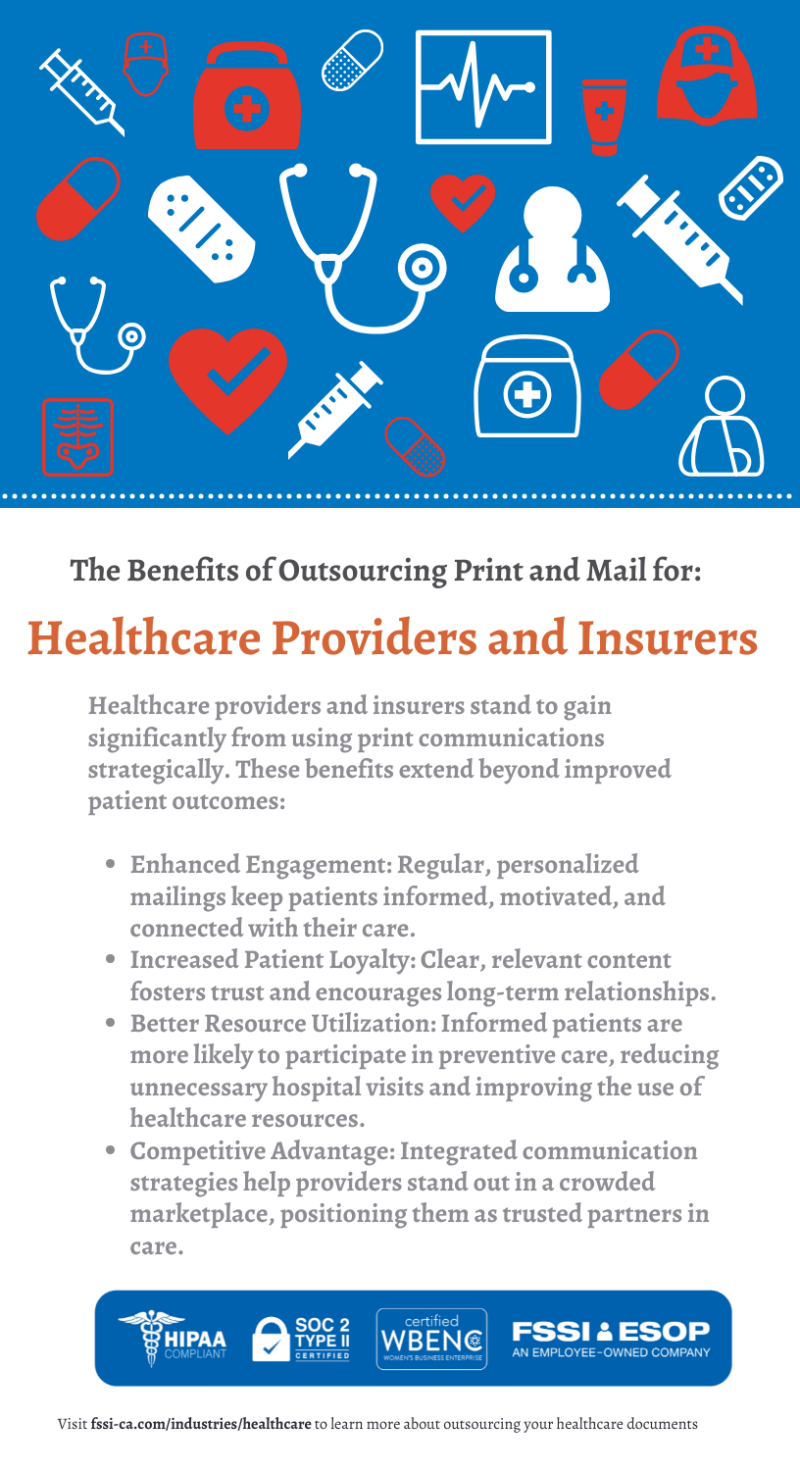
The Benefits of Strategic Print Communication for Healthcare Providers and Insurers
Healthcare providers and insurers stand to benefit significantly from outsourcing print communications strategically. These benefits extend beyond improved patient outcomes:
- Enhanced Engagement: Regular, personalized mailings keep patients informed, motivated, and connected with their care.
- Increased Patient Loyalty: Clear, relevant content fosters trust and encourages long-term relationships.
- Better Resource Utilization: Informed patients are more likely to participate in preventive care, reducing unnecessary hospital visits and improving the use of healthcare resources.
- Competitive Advantage: Integrated communication strategies help providers stand out in a crowded marketplace, positioning them as trusted partners in care.
For insurers, personalized communications also play a crucial role in educating consumers about their coverage options, promoting preventive care programs, and retaining members through positive customer experiences. A health insurance provider, for example, saw a 15% increase in annual check-ups after including reminders in their monthly statements, a clear testament to the power of strategic print communication.
Improve Patient Engagement With FSSI
FSSI helps healthcare organizations manage secure, personalized print-and-mail communications at scale. From patient statements and billing notices to targeted healthcare outreach, our team can help you create communications that are accurate, compliant, and easier for patients to act on.
If you are evaluating patient statement printing, healthcare mail outsourcing, or a coordinated print-and-digital communication program, contact FSSI to discuss your workflow, compliance requirements, and patient-engagement goals.
Incorporating print communications into patient engagement strategies offers a unique opportunity to create meaningful, lasting connections. Personalized mailers, designed with care and intention, help patients feel valued and informed, fostering trust and encouraging proactive health behaviors.
By balancing print with digital strategies, maintaining HIPAA compliance, and embracing personalization, healthcare providers can revolutionize how they engage with patients. The result is not just better health outcomes, but also stronger patient-provider relationships and a more efficient healthcare system.
If you’re ready to enhance your patient engagement strategy through print communications, explore our HIPAA-compliant print and mail solutions. Contact us today for a free consultation, and take the first step toward building more meaningful connections with your patients.
